

The EY Foundation is a charitable company registered in England and Wales and Scotland with registered charity number 1157154 and SC045076. It is also a member firm of Ernst & Young Global Limited
Recent Searches

In this Q&A, Kelly Godden, Senior Talent & Performance Lead at Ofcom, shares how they’re opening doors to the workplace, what makes work experience truly impactful, and how it can shape young people’s futures.
1. What motivated you to work with the EY Foundation? Was it in response to a particular challenge?
At Ofcom, improving social mobility is a core part of our Diversity and Inclusion strategy, particularly our commitment to ensuring that the people who shape our work reflect the breadth of experiences of the citizens and consumers we serve. While we have made strong progress in developing inclusive early careers programmes, we are also aware that inequalities in access to opportunities often begin much earlier.
We wanted to focus on a specific challenge: how young people from lower socio‑economic backgrounds can gain meaningful, structured experience of the workplace at a formative stage*, helping them build confidence, skills and awareness of different career options. Many young people have limited exposure to professional environments, which can shape how they perceive what is “for them”, regardless of their ability or potential.
Working with an organisation that supports paid, structured work experience has enabled us to contribute at an earlier point in the journey. Through this work, we are able to provide young people with practical experience and a clearer understanding of how skills developed in education can translate into real‑world settings.
Many young people have limited exposure to professional environments, which can shape how they perceive what is “for them”, regardless of their ability or potential.
2. What did you go on to do with us and what would you say the benefits have been for your organisation?
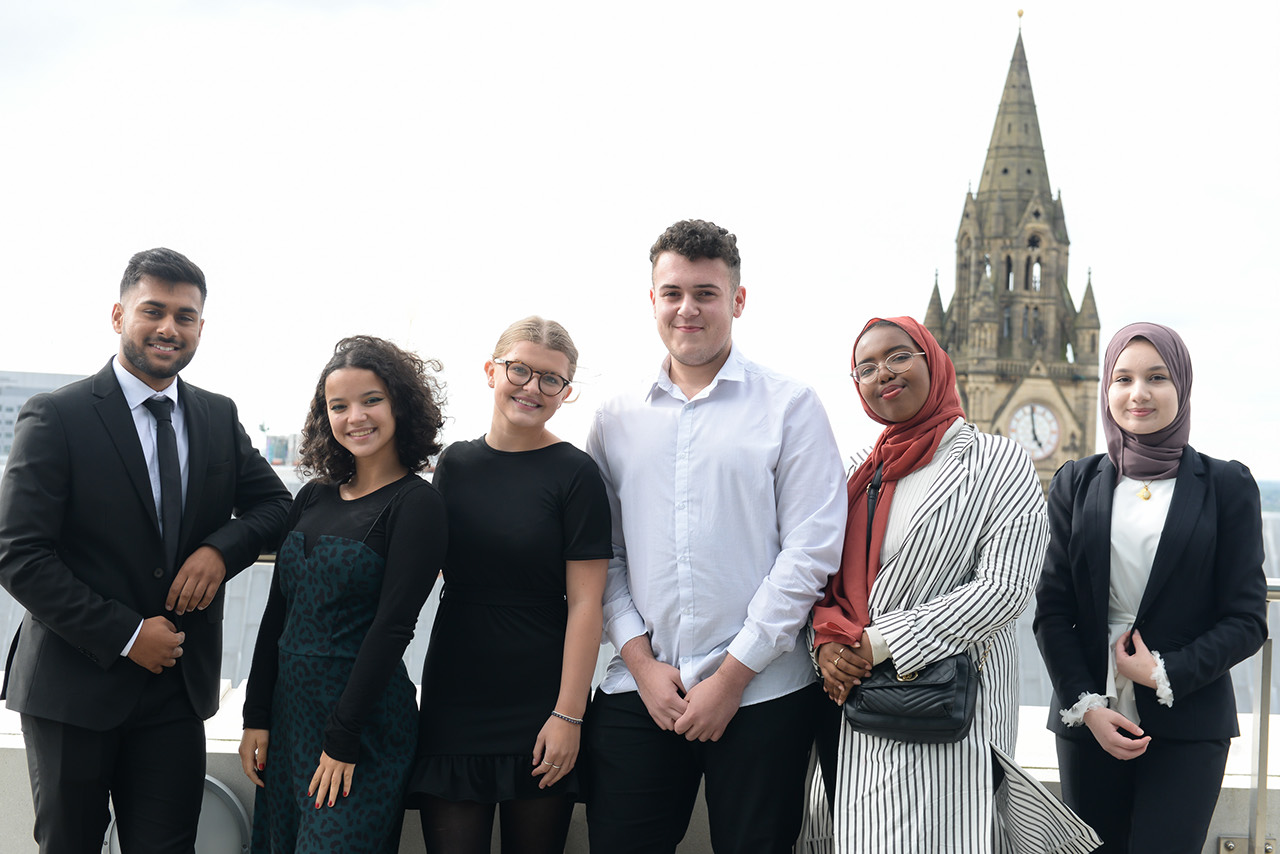
Over the last four years, we have partnered with the EY Foundation to support its Tech Futures work experience programme, hosting cohorts of young people for structured placements alongside skills workshops and mentoring.
For Ofcom, the benefits have been twofold. Firstly, it has strengthened our early careers offer by giving us a practical, high-impact way to support social mobility at an earlier stage than our traditional graduate, intern or apprenticeship entry points. Secondly, it has been hugely valuable for our people. Colleagues consistently tell us how rewarding it is to engage with young people who bring fresh perspectives, curiosity and challenge assumptions about technology and regulation.
3. What did you learn from working with the EY Foundation and young people? What will you do differently going forward?
Many of the young people we’ve worked with have significant capability and motivation, but far less exposure to professional environments or informal networks. Clarity, structure, paid participation and visible role models make a real difference in helping them engage and thrive.
Working with the EY Foundation has also reinforced that work experience should not be passive. Young people gain the most when they are trusted with real tasks, encouraged to ask questions and supported to reflect on what they’re learning.
Going forward, we are continuing to improve how we prepare our managers and teams to host young people, particularly around giving them meaningful tasks and activities to partake in and giving confidence-building feedback.
For Ofcom, the benefits have been twofold. […] Colleagues consistently tell us how rewarding it is to engage with young people who bring fresh perspectives, curiosity and challenge assumptions about technology and regulation.
4. What else do you do to be a youth‑friendly employer or drive social mobility in your organisation?
Alongside our partnership with the EY Foundation, Ofcom continues to invest in inclusive early careers pathways, including apprenticeships, internships and graduate programmes.
We also work with schools, colleges and other partners to demystify careers in regulation, technology and other professions, particularly for young people who may not have existing access to these careers. This sits within our wider D&I strategy, which aims to improve representation, fairness and inclusion across the organisation.
5. How has your approach to social mobility and young people changed over the last five years?
We have greater focus on how we support young people from a wider range of backgrounds to gain insight, experience and reassurance as they take their first steps in their career. We focus on the quality of work experience, ensuring it is structured, supportive and genuinely useful in helping them build confidence, skills and understanding. We are also more intentional about listening to feedback from young people themselves and reflecting on what impact our involvement is really having and how we can continually strengthen our offering to them.
We focus on the quality of work experience, ensuring it is structured, supportive and genuinely useful in helping them build confidence, skills and understanding.
6. Have you faced any challenges during your organisation’s social mobility journey and how have you addressed them?
One ongoing challenge has been balancing operational pressures with the time and resource needed to deliver high-quality work experience. Partnering with the EY Foundation for our work experience programme has helped significantly here, providing structure, expertise and shared learning that can be difficult to build internally from scratch.
7. Is there a moment that stands out where you felt your organisation made a real difference?
Several moments stand out, particularly when young people tell us that the experience has changed how they see themselves or their future options. Hearing someone say they hadn’t known roles like ours existed, or that they now feel more confident applying for opportunities they previously ruled out, is a powerful reminder of why this work matters.
We are always delighted when the students want to return to Ofcom after the programme, be that for another work experience placement or through joining our apprenticeship programme pipeline.
Hearing someone say they hadn’t known roles like ours existed, or that they now feel more confident applying for opportunities they previously ruled out, is a powerful reminder of why this work matters.
8. What would you say to other employers thinking of advancing their social mobility journey, and what are the business benefits?
I would encourage employers to think about where they can make the most meaningful contribution, and to start with a clear understanding of the barriers young people face before they enter the workforce. Even relatively small, well‑designed interventions can have a significant impact if they are thoughtful, structured and genuinely focused on the experience of young people.
From a business perspective, supporting social mobility brings clear benefits. It helps organisations engage with a wider range of perspectives, strengthens understanding of the communities they serve and builds capability for the future.
* Formative stage: a key developmental period (often during teenage years and early adulthood) when young people are forming their sense of identity, building confidence, and shaping their understanding of future career possibilities.
If you're an employer looking to start your social mobility journey or explore how your business can benefit from diverse talent, learn more and get in touch today.